
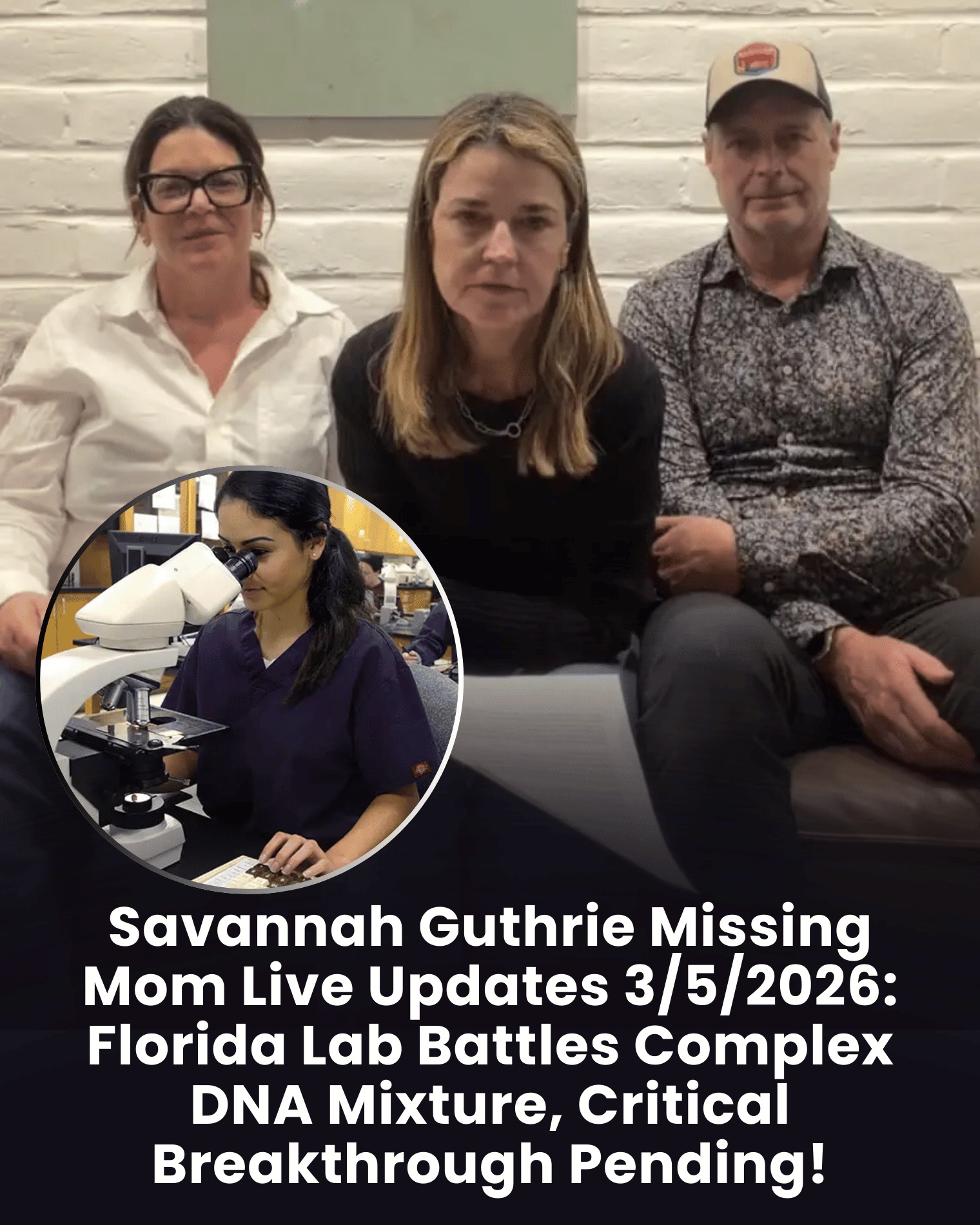
The search for answers in the disappearance of Savannah Guthrie's mother has entered a critical new phase as forensic experts in Florida race against time to analyze a complicated DNA sample that could potentially unlock the entire investigation. Inside a highly controlled laboratory environment, technicians are now working long hours to process biological evidence recovered from a second pair of gloves believed to be connected to the suspect. For investigators and Savannah's family, this sample represents what may be the last strong forensic lead in a case that has left the public anxious and the family desperate for clarity.
The gloves were discovered during the ongoing search for evidence tied to the mysterious figure seen in surveillance footage earlier in the investigation. While the first glove initially sparked hope among detectives, that lead ultimately collapsed when DNA testing confirmed it belonged to an innocent restaurant worker who had simply discarded it after finishing his shift. The revelation forced authorities to refocus their efforts and intensify the hunt for additional evidence that could point directly to the person responsible.
The newly recovered gloves, however, present a far more complicated challenge. According to forensic specialists familiar with the testing process, the biological material extracted from the fabric contains what is known as a mixed DNA profile. This means that genetic material from more than one individual is present within the sample. Such mixtures often occur when multiple people handle the same object or when biological traces overlap over time. In cases like this, separating each contributor's DNA can become a painstaking scientific puzzle.
Technicians at the Florida lab are carefully isolating genetic markers under powerful microscopes and running advanced sequencing tests designed to separate overlapping DNA strands. Each stage of the process requires precision and patience. Even the smallest contamination or misinterpretation could jeopardize the results. As a result, experts are moving methodically, double-checking every step to ensure that any profile they identify is scientifically sound and legally defensible.
Investigators have indicated that if a clear DNA profile belonging to the suspect can be extracted, it will immediately be run through the FBI's national DNA database. That system contains millions of profiles collected from previous criminal cases and convicted offenders. A successful match could instantly provide a name, a criminal history, and potentially the suspect's current location. For law enforcement officials who have spent weeks chasing fragmented clues, such a breakthrough could dramatically accelerate the manhunt.
Meanwhile, the emotional toll on Savannah Guthrie and her siblings continues to grow with each passing day. Family members have remained in close contact with investigators while trying to stay hopeful that the forensic work underway will finally bring them closer to the truth. Friends and supporters say the waiting period has been agonizing, as every update raises the possibility that the next phone call could deliver the breakthrough they have been praying for.
Authorities have emphasized that forensic testing of mixed DNA samples can take time, especially when the evidence is degraded or contaminated. Still, the investigative team remains cautiously optimistic that the ongoing analysis will produce usable results. For Savannah's family, the outcome of this testing represents far more than a scientific milestone—it may be the key to identifying the person responsible and bringing long-awaited answers to a case that has deeply shaken their lives.